Lựa chọn giữakhớp giãn nở vảivà mộtkhớp giãn nở kim loạiĐây không chỉ đơn thuần là vấn đề sản phẩm nào bền hơn hay vật liệu nào chịu được nhiệt độ cao nhất. Sự lựa chọn đúng đắn phụ thuộc vào cách hệ thống vận hành, áp suất hoạt động, môi chất chảy qua, kích thước ống dẫn và tải trọng có thể truyền đến thiết bị được kết nối.
Nhìn chung, các khớp giãn nở bằng vải rất hiệu quả trong các hệ thống ống dẫn lớn, áp suất thấp dùng để dẫn khí nóng, khí thải hoặc khí khói, trong khi các ống xếp bằng kim loại thường được lựa chọn cho các hệ thống đường ống và hệ thống xử lý chịu áp suất cao, nơi khả năng chịu áp suất và độ bền cơ học là rất quan trọng.
Bảng so sánh sau đây giải thích từng thiết kế hoạt động tốt nhất ở đâu và những yếu tố nào cần được đánh giá trước khi lựa chọn khe co giãn.
Quyết định nhanh chóng:
Chọn mộtkhớp giãn nở vảiKhi ứng dụng liên quan đến hệ thống ống dẫn lớn, áp suất thấp, chuyển động ngang hoặc kết hợp đáng kể, rung động, khí nóng hoặc tải trọng phản lực cho phép hạn chế.
Chọn mộtkhớp giãn nở kim loạikhi ứng dụng liên quan đến đường ống chịu áp lực, hơi nước, chất lỏng, tải trọng cơ học cao hơn hoặc hệ thống được thiết kế đặc biệt xung quanh ống thổi kim loại.
| Yếu tố lựa chọn | Khớp giãn nở vải | Khớp giãn nở kim loại |
|---|---|---|
| Dịch vụ điển hình | Ống dẫn công nghiệp và môi chất khí | Đường ống, bình chứa và hệ thống quy trình kỹ thuật |
| Khả năng chịu áp suất | Chủ yếu là các ứng dụng áp suất thấp | Có thể được thiết kế để chịu được áp suất cao hơn đáng kể. |
| Kích thước ống dẫn lớn | Rất phù hợp | Có thể, nhưng thường thì cơ cấu hoạt động sẽ phức tạp hơn. |
| Chuyển động trục | Tuyệt vời khi được thiết kế đúng cách. | Tuyệt vời với hình dạng ống xếp phù hợp. |
| Chuyển động ngang | Khả năng di chuyển cao trong bố cục nhỏ gọn. | Thường yêu cầu cấu hình ống thổi phù hợp. |
| Chuyển động góc | Có thể đáp ứng chuyển động kết hợp | Có sẵn các cấu hình được thiết kế riêng. |
| Cách ly rung động | Độ linh hoạt rất tốt | Tùy thuộc vào ứng dụng |
| Lực lò xo | Nhìn chung là thấp | Ống thổi tạo ra lực lò xo có thể đo được. |
| Hệ thống vật liệu | Vải composite, màng và vật liệu cách nhiệt | Ống thổi hợp kim kim loại |
| Common Media | Không khí nóng, khí thải, khí ống khói, khí công nghiệp | Hơi nước, chất lỏng, khí và chất lỏng dùng trong công nghiệp |
| Hình học điển hình | Hình tròn, hình chữ nhật và hình dạng tùy chỉnh lớn | Chủ yếu là hình tròn, ngoài ra còn có các thiết kế hình chữ nhật được chế tạo tỉ mỉ. |
Một trong những cách dễ nhất để bắt đầu quá trình lựa chọn là xác định xem khớp giãn nở được lắp đặt trong ống dẫn công nghiệp lớn hay trong hệ thống đường ống chịu áp lực.
MỘTkhớp giãn nở vải không kim loạiHệ thống này đặc biệt phù hợp với các đường ống dẫn khí và không khí lớn. Chúng thường được tìm thấy trong các nhà máy điện, nhà máy xi măng, nhà máy thép, lò công nghiệp, hệ thống thu gom bụi, thiết bị đốt và hệ thống xử lý khí thải.
Môi chất trong quá trình thường là chất khí, và áp suất thường tương đối thấp so với đường ống dẫn khí có áp suất cao.
Khớp giãn nở bằng kim loại sử dụng các nếp gấp kim loại mỏng được định hình để tạo độ linh hoạt trong khi vẫn duy trì khả năng chịu áp suất. Ống thổi kim loại được sử dụng rộng rãi trong hệ thống đường ống hơi nước, đường ống công nghiệp, hóa dầu, hóa chất và các hệ thống kỹ thuật khác, nơi áp suất là một yêu cầu thiết kế quan trọng.
Sự khác biệt về môi trường ứng dụng này giải thích phần lớn sự khác biệt về hiệu năng giữa hai công nghệ.
Áp suất thường là yếu tố đầu tiên phân biệt khớp giãn nở bằng vải với ống thổi bằng kim loại.
Các khớp nối bằng vải chủ yếu được thiết kế cho hệ thống ống dẫn khí áp suất thấp. Thành phần linh hoạt của chúng bao gồm vải phủ, lớp gia cường, màng bịt kín và lớp cách nhiệt, thay vì một ống thổi kim loại chịu áp suất.
Chúng thường được tìm thấy ở:
Ống thổi kim loại có thể được chế tạo để chịu được áp suất bên trong lớn hơn đáng kể. Thành kim loại uốn lượn của nó được thiết kế để vừa đảm bảo tính linh hoạt vừa giữ được áp suất.
Điều này làm cho các khớp giãn nở bằng kim loại phù hợp với các ứng dụng như:
Quy tắc lựa chọn:Nếu cần phải chịu được áp suất hệ thống lớn, thông thường nên ưu tiên đánh giá loại ống xếp kim loại trước. Các khớp giãn nở bằng vải không nên được coi là sự thay thế trực tiếp cho ống xếp kim loại chịu áp suất.
Sự chuyển động chính là yếu tố khiến các thiết kế vải trở nên đặc biệt hấp dẫn.
Đai vải có thể biến dạng trên một diện tích tương đối rộng. Điều này cho phép nó chịu được sự dịch chuyển đáng kể theo trục, chiều ngang và góc mà không cần dựa vào nhiều nếp gấp kim loại được định hình sẵn.
Đối với các hệ thống ống dẫn lớn, nơi sự giãn nở nhiệt xảy ra theo nhiều hướng, điều này có thể đơn giản hóa đáng kể việc bố trí khớp giãn nở.
Ống thổi bằng kim loại cũng có thể đáp ứng những chuyển động này, nhưng cấu hình của ống thổi phải được thiết kế đặc biệt phù hợp với chúng.
For example, larger lateral displacement may require a universal metallic expansion joint with multiple bellows and a center pipe rather than a single bellows element.
Therefore, when large lateral or combined movement is required in a low-pressure duct, afabric expansion jointis often the more practical design.
This is an important engineering difference that is often overlooked during purchasing.
A metallic bellows behaves like a mechanical spring. When it is compressed, extended or laterally displaced, it generates reaction forces that must be considered in the piping design.
These forces may influence:
Fabric expansion joints generally produce much lower spring forces because the flexible textile element is considerably softer than formed metal bellows.
For large duct systems connected to fans, furnaces or lightweight structural components, reducing these reaction loads can be a major advantage.
Fans, blowers, turbines and other rotating equipment can transmit vibration into connected ductwork.
A flexible fabric connector can help isolate some of this vibration because the textile belt does not create the same rigid mechanical path as solid ductwork.
This makes fabric expansion joints especially useful around:
Metal expansion joints can also accommodate vibration, but the movement amplitude, frequency and expected cycle life must be considered carefully in the bellows design.
For high-cycle vibration, neither product should be selected solely from a general product specification. Actual vibration data should be supplied to the manufacturer.
Large rectangular ductwork strongly favors fabric construction in many industrial systems.
Consider an exhaust duct measuring several meters across. Producing a metallic flexible element for such a large cross-section requires substantial metal fabrication and careful control of corner stresses.
A rectangular fabric joint can use a flexible belt installed around the perimeter of the duct, making very large dimensions more practical.
This is whyrectangular fabric expansion jointsare frequently seen in:
For these applications, size alone can significantly influence the final choice.
It is incorrect to assume that metal is always better at high temperature or that fabric automatically has a lower usable process temperature.
The two systems manage temperature differently.
Metallic bellows temperature capability is determined primarily by the selected alloy, design pressure, material strength at temperature and expected fatigue life.
Stainless steels and nickel-based alloys can be selected for elevated-temperature service.
A high-temperature fabric expansion joint may use several thermal layers rather than exposing one flexible membrane directly to the process gas.
A typical construction may include:
The insulation package can reduce the temperature reaching the external sealing materials.
Therefore, ahigh temperature fabric expansion jointshould be selected based on the full temperature gradient through the joint, not simply on the temperature rating of one fabric.
Hot flue gas and exhaust systems are among the most common applications for non-metallic designs.
These installations often combine:
That combination closely matches the strengths of fabric expansion joints.
Typical installations include:
For customized designs, BSTFLEX manufacturesNon Metallic Fabric Expansion Jointsfor industrial ducting, hot-air, flue-gas and exhaust applications.
Corrosion resistance cannot be judged simply by comparing “fabric” with “metal.”
The actual materials must be compared.
A metallic expansion joint may use corrosion-resistant stainless steel or nickel alloy when aggressive media are present.
A fabric expansion joint may use chemical-resistant barrier layers such as PTFE-coated textiles or other compatible membrane systems.
Selection should consider:
Condensation is particularly important in flue-gas systems because chemical attack may become more severe when corrosive gases condense on cooler joint surfaces.
Neither fabric nor metallic bellows should necessarily be exposed directly to severe turbulent flow or abrasive particles without protection.
A fabric joint may use:
A metallic bellows may also require an internal liner to prevent erosion, turbulent excitation or direct impingement on the convolutions.
This means gas velocity, dust loading and flow direction should always be included in the expansion joint specification.
Available space can strongly affect the decision.
A fabric joint can often absorb considerable lateral movement within a relatively short flexible span.
Metallic systems can also accommodate large displacement, but may require more complex arrangements such as universal joints, hinged joints or gimbal configurations depending on movement direction.
However, there are also piping layouts where a compact metallic bellows is the more appropriate design.
Installation space should therefore be considered together with pressure and movement rather than as an isolated factor.
Fabric flexible elements are generally lighter than comparable large metallic assemblies.
This difference becomes increasingly important as duct dimensions increase.
Lower component weight can reduce loads during:
In very large rectangular duct systems, this can be an important practical advantage.
Fabric expansion joints are often designed with replaceable flexible belts.
If the surrounding steel frames remain serviceable, maintenance may involve replacing the flexible element rather than removing the complete assembly.
This can be useful in large duct installations where removing welded steel frames would create significant shutdown work.
Metal expansion joints generally require replacement or repair of the metallic bellows assembly when the bellows itself becomes damaged.
The actual maintenance cost depends on system design, accessibility, joint size and failure mode.
There is no meaningful universal statement such as “metal lasts longer than fabric.”
Service life depends on whether the joint was correctly designed for the application.
A fabric joint can fail prematurely because of:
A metal bellows can fail because of:
Correct engineering matters more than simply choosing one material category over another.
| Application | Usually Preferred | Reason |
|---|---|---|
| Large Low-Pressure Flue Gas Duct | Fabric Expansion Joint | Large size, flexibility and multidirectional movement |
| High-Pressure Steam Pipe | Metal Expansion Joint | Pressure containment requirement |
| Large Rectangular Exhaust Duct | Fabric Expansion Joint | Practical for large custom cross-sections |
| Fan Connection | Fabric Expansion Joint | Low reaction forces and vibration isolation |
| Pressurized Chemical Pipeline | Metal Expansion Joint | Pressure and mechanical requirements |
| Cement Kiln Exhaust Duct | Fabric Expansion Joint | Hot gas, large duct and substantial movement |
| Process Piping | Metal Expansion Joint | Engineered for piping pressure and code requirements |
| Large Boiler Flue Duct | Fabric Expansion Joint | Low-pressure hot-gas application |
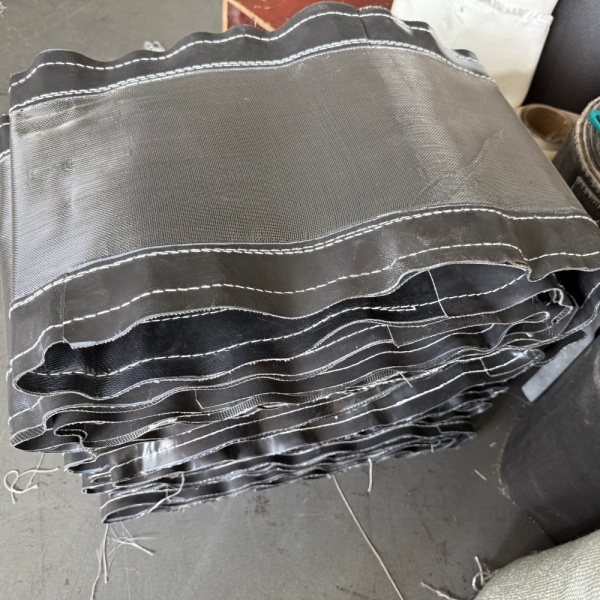
Afabric expansion jointshould be seriously considered when most of the following conditions are present:
This is the typical application envelope for anon metallic expansion joint.
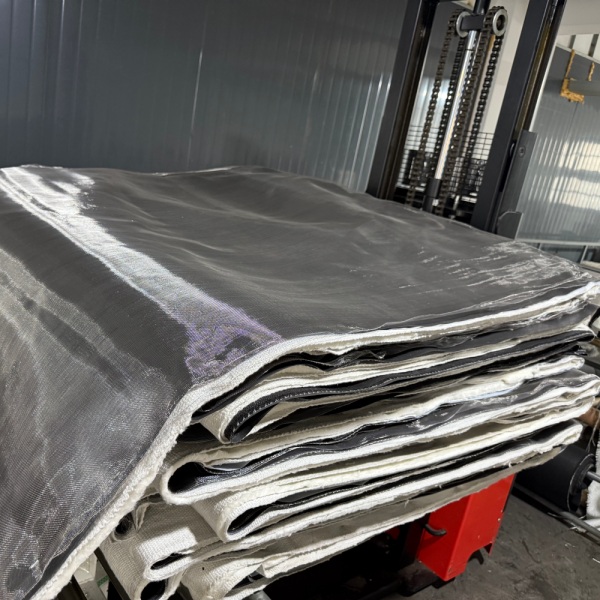
A metallic expansion joint should normally be evaluated first when:
Metallic bellows are engineered pressure-containing components and should be designed around system pressure, temperature, movement, material, fatigue life and piping loads.
Instead of asking, “Which expansion joint is better?” engineers should ask, “Which expansion joint architecture matches this system?”
Use the following sequence.
Is it a large duct or pressurized pipe?
Specify normal pressure, design pressure and whether the system operates under positive or negative pressure.
Provide both continuous operating temperature and maximum excursion temperature.
List axial compression, axial extension, lateral displacement and angular movement individually.
Specify hot air, exhaust gas, flue gas, steam, liquid or process chemical.
Include gas velocity, dust loading, abrasive particles and turbulence.
Determine how much reaction force can safely be transferred to fans, duct supports, equipment nozzles and anchors.
Confirm shape, dimensions, flange arrangement and available face-to-face installation length.
Consider a large rectangular flue-gas duct installed downstream of industrial combustion equipment.
The system has:
In this situation, a fabric expansion joint is often an efficient choice because it can combine large cross-section capability, multidirectional flexibility and low reaction forces.
Now consider a high-pressure steam line operating at elevated temperature.
Although thermal movement still exists, the system requires reliable pressure containment. A metallic bellows engineered for the piping pressure, temperature and movement is generally the appropriate technology.
These examples demonstrate why the operating system must determine the expansion joint type.
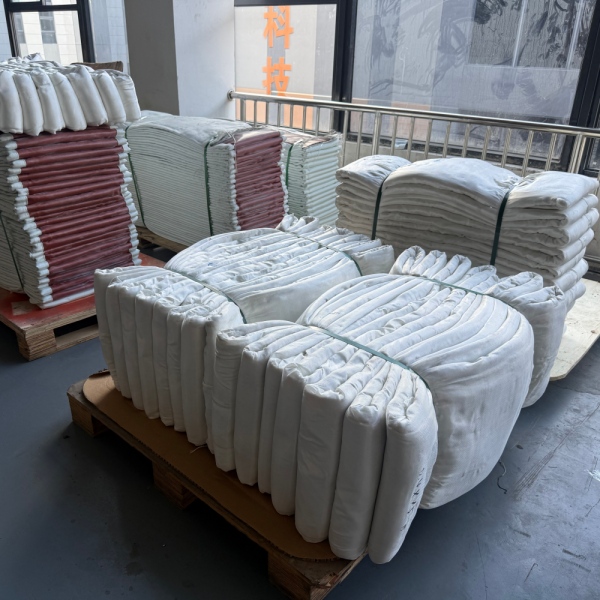
For either metallic or fabric designs, the quality of the engineering recommendation depends heavily on the information supplied.
For a custom fabric joint, BSTFLEX recommends providing:
BSTFLEX manufactures custom non-metallic expansion joints for industrial hot-air, exhaust and flue-gas ducting systems.
Depending on operating conditions, flexible constructions can incorporate technical fabrics, coated fiberglass, PTFE-based sealing layers, high-temperature insulation and protective components.
Round, rectangular and application-specific configurations can be manufactured according to customer drawings and operating data.
See theKhớp giãn nở vải không kim loại BSTFLEXđể biết các tùy chọn sản xuất theo yêu cầu.
Nếu ứng dụng của bạn sử dụng ống dẫn công nghiệp lớn để vận chuyển không khí nóng, khí thải hoặc khí khói, hãy gửi bản vẽ và điều kiện vận hành cho BSTFLEX để được đánh giá.
Bao gồm kích thước ống dẫn, nhiệt độ, áp suất, môi chất, chuyển động dọc trục, chuyển động ngang, chiều dài giữa hai mặt bích và số lượng.

 English
 français
 Deutsch
 русский
 italiano
 español
 português
 Nederlands
 العربية
 日本語
日本語 한국의
한국의 Türkçe
 Polski
 slovenský
 Indonesia