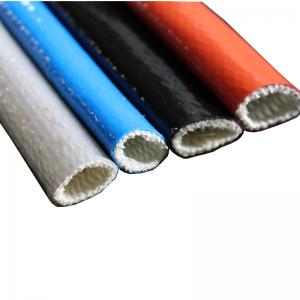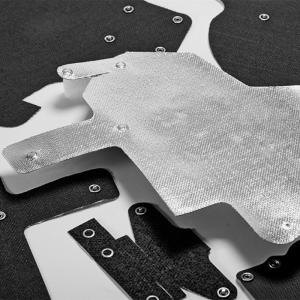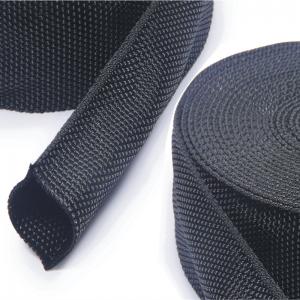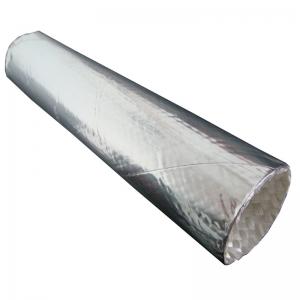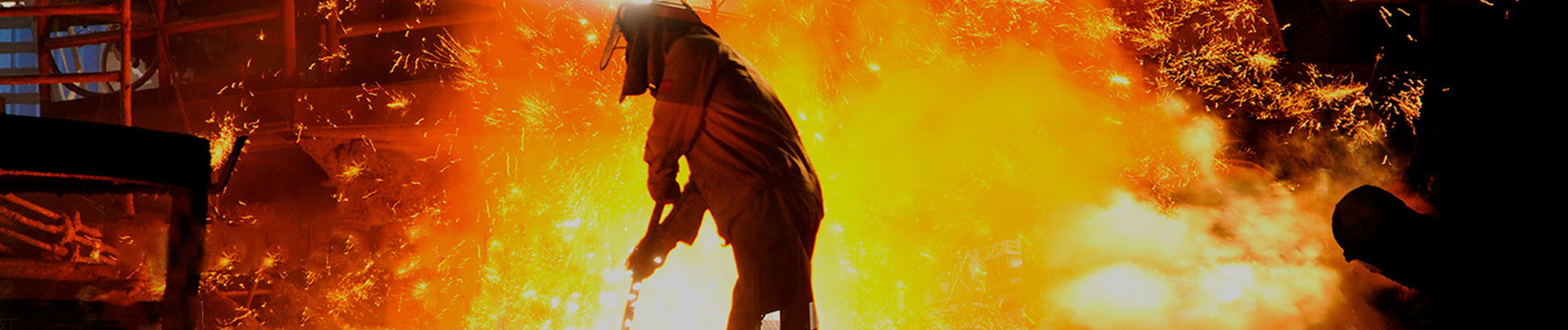
MỘTkhớp giãn nở vảiĐây là một khớp nối mềm được lắp đặt trong hệ thống ống dẫn công nghiệp để hấp thụ chuyển động giữa các đoạn thiết bị hoặc đường ống. Thay vì gây ra sự giãn nở nhiệt, rung động hoặc thay đổi hướng trong các cấu trúc thép cứng nhắc, đoạn mềm sẽ biến dạng khi hệ thống chuyển động.
Các khớp nối giãn nở bằng vải thường được sử dụng trong các hệ thống dẫn khí nóng, khí thải, khí khói và các môi chất khí khác. Thành phần linh hoạt của chúng có thể bao gồm các loại vải kỹ thuật dệt, vải phủ, màng bịt kín khí, lớp gia cường và vật liệu cách nhiệt được lựa chọn phù hợp với điều kiện hoạt động thực tế.
Vì phần tử linh hoạt không phải là kim loại, nên loại khớp này cũng được gọi rộng rãi là khớp nối.khớp giãn nở không kim loạihoặckhớp giãn nở vải không kim loại.
Để biết thêm thông tin về các thiết kế công nghiệp theo yêu cầu, vui lòng xem phần [liên kết đến trang web của chúng tôi].Khớp giãn nở vải không kim loại BSTFLEX.
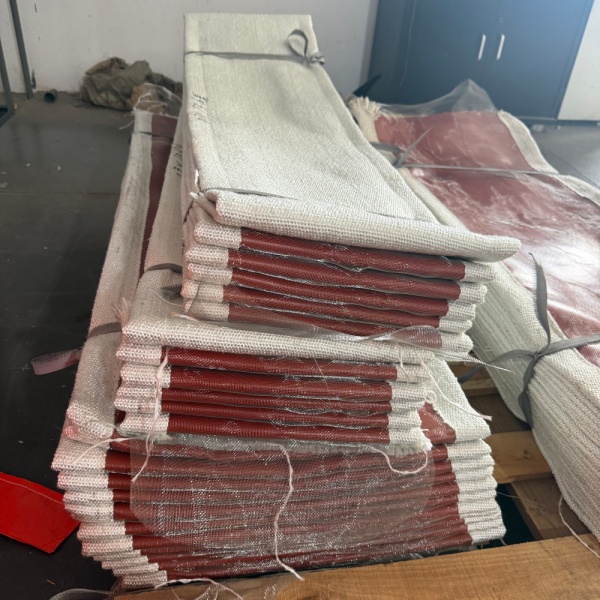
Khớp giãn nở bằng vải là một đoạn mềm dẻo được thiết kế đặc biệt, đặt giữa hai phần tương đối cứng của hệ thống ống dẫn. Mục đích của nó là cho phép chuyển động có kiểm soát trong khi vẫn duy trì kết nối cần thiết giữa các phần đó.
Các ống dẫn công nghiệp hiếm khi giữ nguyên kích thước trong quá trình hoạt động. Khi lò nung, nồi hơi, hệ thống hút khí thải hoặc ống dẫn khí nóng lên, cấu trúc kim loại xung quanh sẽ giãn nở. Khi nguội đi, nó lại co lại. Quạt và thiết bị quay cũng có thể tạo ra rung động, trong khi dung sai lắp đặt có thể tạo ra những sai lệch nhỏ giữa các bộ phận liền kề.
Nếu những chuyển động này được truyền trực tiếp qua hệ thống ống dẫn cứng, chúng có thể tạo ra thêm tải trọng lên:
Mối nối bằng vải tạo ra một vùng linh hoạt, nơi một phần chuyển động có thể diễn ra mà không yêu cầu toàn bộ cấu trúc ống dẫn phải hoạt động như một khối cứng nhắc.
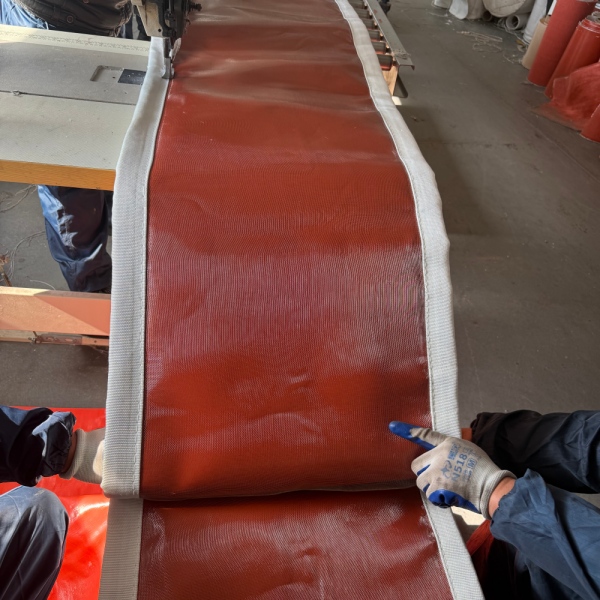
Thuật ngữkhớp giãn nở không kim loạiNó mô tả yếu tố linh hoạt chứ không phải mọi thành phần trong toàn bộ cụm lắp ráp.
Khung kim loại, thanh kẹp, lớp lót hoặc các phụ kiện khác vẫn có thể được sử dụng xung quanh khớp nối. Tuy nhiên, phần thực hiện chuyển động linh hoạt chính được chế tạo từ vải, chất đàn hồi, vải dệt phủ, màng nhiều lớp hoặc sự kết hợp của các vật liệu này thay vì ống thổi kim loại định hình.
Sự khác biệt này rất quan trọng vì khe co giãn bằng vải và bằng kim loại có hành vi khác nhau.
Ống thổi kim loại điều chỉnh chuyển động bằng cách uốn cong các nếp gấp kim loại đã được định hình. Khớp giãn nở bằng vải sử dụng tính linh hoạt của đai dệt hoặc vật liệu tổng hợp để thay đổi hình dạng khi ống dẫn chuyển động.
Đối với các đường ống công nghiệp lớn, đặc biệt là những đường ống vận chuyển khí ở áp suất tương đối thấp, cấu trúc này có thể cung cấp khả năng di chuyển đáng kể trong không gian lắp đặt nhỏ gọn.
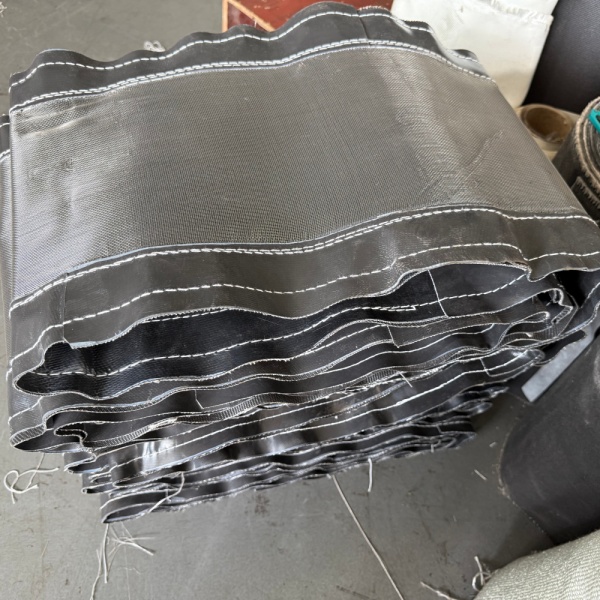
Nguyên tắc hoạt động cơ bản rất đơn giản.
Hãy tưởng tượng hai đoạn ống dẫn khí nóng được ngăn cách bởi một khe hở được kiểm soát. Một phần tử bằng vải mềm dẻo sẽ bắc ngang khe hở này và được gắn chắc chắn xung quanh chu vi của mỗi đoạn ống dẫn.
Khi đường ống dẫn khí nóng lên và giãn nở, khoảng cách hoặc sự thẳng hàng giữa hai phần sẽ thay đổi. Thay vì chống lại sự chuyển động đó như một mối nối cứng nhắc, đai mềm dẻo sẽ thay đổi hình dạng.
Tùy thuộc vào thiết kế, khớp nối có thể đáp ứng nhiều loại chuyển động khác nhau.
Hiện tượng nén dọc trục xảy ra khi khoảng cách giữa hai đoạn ống ngắn dần dọc theo đường tâm.
Hiện tượng này thường xảy ra khi sự giãn nở nhiệt khiến một phần đường ống dẫn khí dịch chuyển về phía phần khác. Đoạn ống mềm sẽ co lại hoặc gập lại một cách có kiểm soát để thích ứng với sự giảm khoảng cách.
Sự giãn nở theo trục là điều kiện ngược lại. Khoảng cách giữa các phần nối tăng lên dọc theo trục dọc.
Thành phần vải phải có đủ hình học khả dụng để kéo giãn mà không bị giãn quá mức.
Sự dịch chuyển ngang xảy ra khi một khớp nối ống dẫn dịch chuyển sang một bên so với khớp nối còn lại.
Điều này đặc biệt quan trọng trong các hệ thống ống dẫn lớn, nơi sự chuyển động của thiết bị, sự giãn nở nhiệt theo hướng khác hoặc hình dạng lắp đặt tạo ra sự lệch tâm thay vì chỉ đơn thuần là sự nén hoặc giãn nở.
Chuyển động góc xảy ra khi hai mặt nối không còn song song với nhau.
Đai mềm biến dạng không đều xung quanh chu vi của nó, cho phép một bên bị nén lại trong khi phần khác giãn ra.
Các hệ thống công nghiệp thực tế không phải lúc nào cũng chỉ chuyển động theo một hướng. Sự dịch chuyển theo trục, theo phương ngang và theo góc có thể xảy ra đồng thời.
Đây là một trong những lý dokhớp giãn nở ống vảiNó đặc biệt hữu ích trong các bố trí đường ống phức tạp. Hình dạng khớp nối có thể được thiết kế dựa trên sự kết hợp dự kiến của các chuyển động thay vì xử lý từng chuyển vị một cách độc lập.
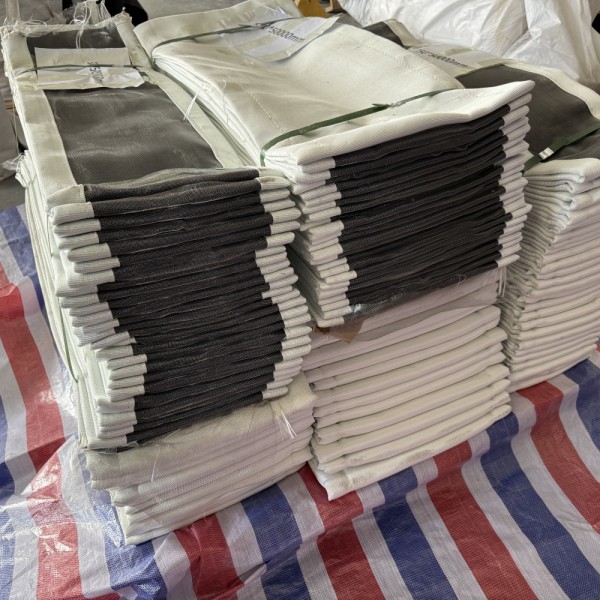
Giãn nở nhiệt là lý do được biết đến nhiều nhất để lắp đặt khe co giãn, nhưng đó không phải là lý do duy nhất.
Yêu cầu chuyển động hoàn chỉnh có thể phát sinh từ một số điều kiện vận hành.
| Gây ra | Điều gì xảy ra trong hệ thống? | Vai trò của khe co giãn |
|---|---|---|
| Sự giãn nở nhiệt | Ống dẫn khí bằng kim loại giãn nở khi nhiệt độ tăng. | Cho phép chuyển động có kiểm soát theo chiều không gian |
| Sự co giãn do nhiệt | Hệ thống ống dẫn khí co lại trong thời gian ngừng hoạt động hoặc làm mát. | Allows the system to return toward its cold position |
| Fan Vibration | Mechanical vibration is transferred from rotating equipment | Provides a flexible connection between equipment and ducting |
| Misalignment | Connecting duct faces may not be perfectly aligned | Can accommodate specified offsets within the joint design |
| Structural Movement | Supports or equipment may move relative to each other | Provides a controlled flexible section |
| Operating Cycles | Repeated heating and cooling creates cyclic movement | Accommodates repeated dimensional changes when correctly designed |
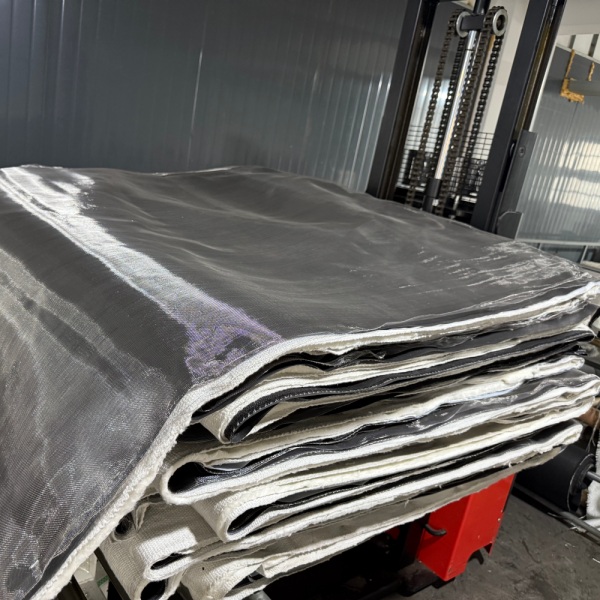
A fabric expansion joint should not be viewed simply as a piece of cloth connecting two ducts.
The flexible section is an engineered material system. Depending on service conditions, it may use a single flexible layer or several different layers, each selected for a specific function.
The outer layer forms part of the flexible envelope and may also provide resistance to weathering, environmental exposure or external mechanical conditions.
This layer helps contain the process gas. Its material must be compatible with the expected temperature, gas composition, moisture and chemical exposure.
Reinforcement provides mechanical support and dimensional stability to the flexible element. Fiberglass and other technical textile constructions are commonly considered depending on temperature and mechanical requirements.
High gas temperature does not necessarily mean every layer of an expansion joint should be exposed directly to that temperature.
An insulation package can reduce heat transfer from the process side toward temperature-sensitive sealing or outer layers.
Hot gas velocity, ash, dust or abrasive particles can damage an unprotected flexible surface. Some systems therefore require an internal liner, baffle or other protection to shield the joint from direct gas flow and particulate impact.
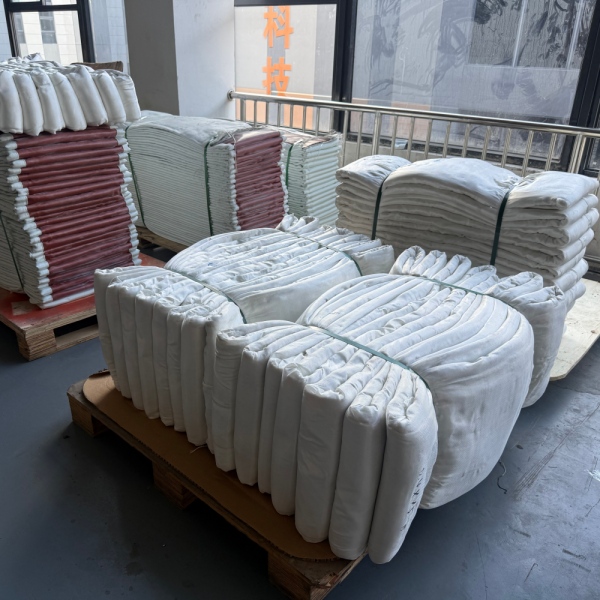
One material rarely provides every property required by a severe industrial application.
For example, a material with excellent temperature resistance may not provide the best gas sealing. A highly flexible sealing material may require reinforcement. A chemically resistant membrane may need insulation to keep its operating temperature within an acceptable range.
As a result, manyfabric expansion jointsuse a combination of materials rather than one fabric performing every function.
Typical material families include:
BSTFLEX also manufactures a broad range ofhigh temperature fabrics, allowing material construction to be evaluated according to thermal, chemical and mechanical requirements.
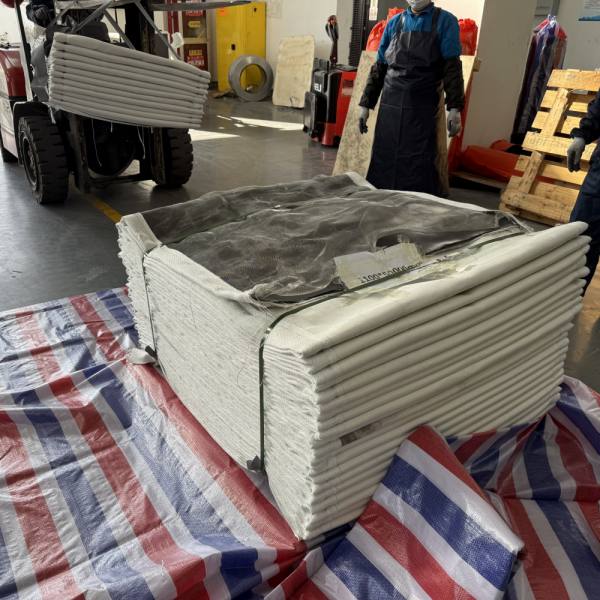
Fabric joints are mainly associated with industrial gas-handling and ducting systems rather than conventional high-pressure liquid piping.
Typical applications include the following.
Boilers, furnaces and combustion equipment can generate hot flue gases that must travel through large duct networks. These ducts experience significant dimensional change between ambient and operating temperatures.
Exhaust ducts connected to engines, industrial furnaces, thermal processing equipment or pollution-control systems may require movement compensation between hot equipment and downstream ducting.
Power plants use large gas-handling systems around boilers, fans, air-handling equipment and emission-control installations. Thermal growth and vibration can occur at multiple connection points.
Cement production combines heat, large duct dimensions, dust and continuous process operation. Flexible expansion sections may be required around kiln-related systems, fans and process ducts.
High-temperature furnaces, hot-air systems and exhaust ducts in steel and metal-processing plants can generate significant thermal movement.
Placing a flexible connection between rotating equipment and rigid ducting can help prevent all equipment movement from being transmitted directly into the surrounding duct structure.
Large ducting systems used with filtration, scrubber, flue-gas treatment and other air-pollution-control equipment often need flexible connections between process components.
Both products are intended to manage movement, but they should not be considered interchangeable simply because they share the term “expansion joint.”
| Characteristic | Fabric Expansion Joint | Metallic Bellows |
|---|---|---|
| Flexible Element | Fabric, coated textile or composite membrane | Formed metal bellows |
| Common Application | Large industrial ducts and gaseous-media systems | Industrial piping and engineered duct or process systems |
| Movement Method | Flexible belt changes geometry | Metal convolutions flex |
| Large Duct Sizes | Well suited to custom large cross-sections | Requires application-specific metallic design |
| Multidirectional Movement | Can accommodate several movement directions in one flexible section | Depends on bellows geometry and assembly design |
| Material System | Can combine several fabric, coating and insulation layers | Primarily determined by metallic alloy and bellows construction |
Pressure, temperature, process medium, movement, duct size and system design must all be considered before deciding which expansion joint technology is appropriate.
A flexible joint can help isolate vibration between connected components because its flexible element does not behave like a completely rigid metal duct section.
This is useful near fans, blowers and other equipment that produces mechanical vibration.
However, vibration should still be treated as an engineering input. Frequency, amplitude, equipment arrangement and joint geometry all influence performance. A fabric expansion joint should not be selected only because a system is described as “vibrating.”
There is no universal movement value that applies to every fabric expansion joint.
Movement capability depends on:
For this reason, axial, lateral and angular movements should be stated separately when specifying a custom expansion joint.
A request such as “50 mm total movement” is less useful than specifying how that movement occurs.
For example:
These values are examples of how movement information can be communicated, not standard ratings for every joint.
There is also no single temperature rating that defines all fabric expansion joints.
The allowable process temperature depends on the complete construction.
A high-temperature joint may be designed so that the process-side protection and insulation reduce the temperature reaching the gas-sealing membrane and external flexible layers.
Temperature selection should therefore consider:
This is why specifying only “high temperature fabric expansion joint” is insufficient for engineering selection.
A manufacturer needs more than the nominal duct dimensions to select a reliable construction.
The most useful project information includes:
| Design Information | Typical Details Required |
|---|---|
| Duct Geometry | Round, rectangular, square or special shape |
| Dimensions | Diameter or width and height |
| Face-to-Face Length | Available installation distance |
| Temperature | Normal and maximum process temperature |
| Pressure | Positive or negative operating and design pressure |
| Process Medium | Hot air, flue gas, exhaust gas or other process gas |
| Axial Movement | Compression and extension |
| Lateral Movement | Required transverse offset |
| Angular Movement | Required angular displacement |
| Chemical Conditions | Acidic, alkaline, moisture or other process exposure |
| Particulate Loading | Dust, ash or abrasive particles |
| Installation Environment | Indoor, outdoor, weather exposure or confined area |
Anon metallic expansion jointshould be considered when an industrial ducting system needs flexibility and the operating conditions are suitable for a fabric-based construction.
Typical reasons include:
The final decision should always be based on actual system conditions rather than the product name alone.
Some basic constructions can be standardized, but industrialfabric expansion jointsare frequently customized.
Two ducts with the same dimensions may require completely different expansion joints if they operate at different temperatures, carry different gases or experience different movements.
Important differences may include:
This is why drawings and operating data are particularly valuable when sourcing replacement or OEM fabric expansion joints.
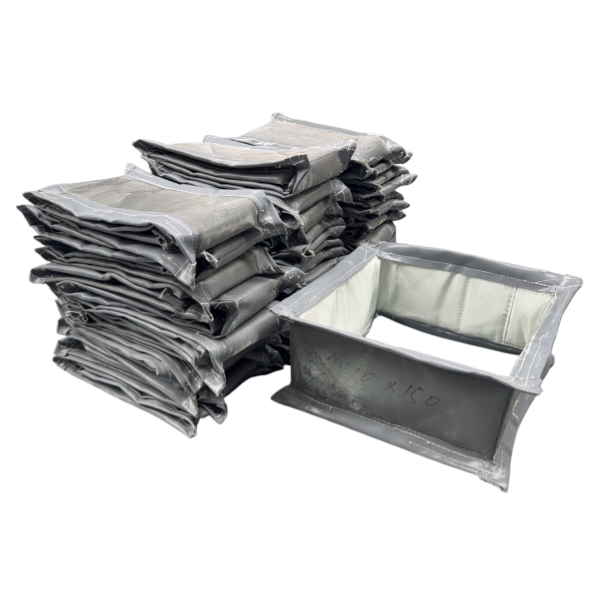
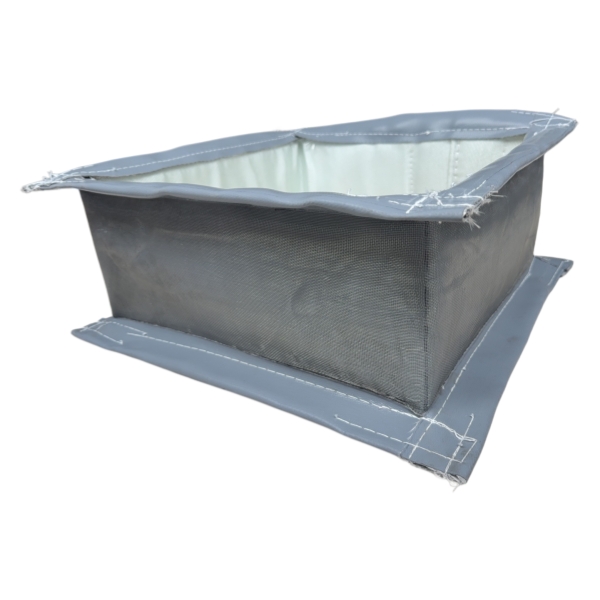
Rectangular joints are widely used on large industrial duct systems. Their corner sections require careful design because the flexible element does not deform identically along straight sides and corners.
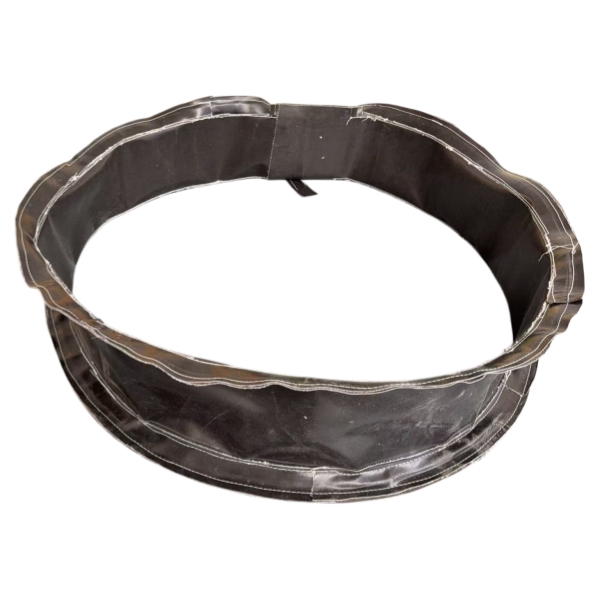
Round joints are used on circular ducting, fan connections and exhaust systems. The circumference provides a continuous attachment surface around the duct.
Square configurations are similar in principle to rectangular designs but may be required by specific duct or equipment layouts.
Transitions, non-standard dimensions and application-specific geometries can be manufactured when existing industrial equipment cannot accept a standard shape.
Expansion joint service life depends heavily on correct specification and installation.
Potential failure mechanisms include:
A damaged joint should therefore not automatically be replaced with an identical copy without understanding why the original unit failed.
For replacement projects, operating history can be as valuable as dimensional information.
In industrial ducting, the terms are often used for closely related products. A fabric expansion joint uses a flexible non-metallic fabric or composite element, so it falls within the broader non-metallic expansion joint category. The exact terminology varies by industry and construction.
It provides a flexible connection between sections of industrial ductwork so thermal expansion, contraction, lateral displacement, angular movement, vibration and specified misalignment can be accommodated without making the connection completely rigid.
Typical locations include industrial exhaust ducts, flue-gas systems, furnace and boiler ductwork, fan connections, cement plants, power-generation equipment, steel-processing facilities and air-pollution-control systems.
Yes. Depending on the design, they can accommodate axial compression, axial extension, lateral movement, angular movement and combinations of these movements.
No. Fiberglass is an important reinforcement and high-temperature textile, but complete expansion joints may combine coated fiberglass, PTFE-coated fabric, silicone-coated textiles, silica fabrics, insulation and other materials according to operating conditions.
Đúng vậy, khi toàn bộ hệ thống vật liệu được thiết kế phù hợp với nhiệt độ và điều kiện khí thực tế của quá trình. Các ứng dụng ở nhiệt độ cao thường yêu cầu nhiều lớp chức năng và lớp bảo vệ thích hợp giữa dòng khí nóng và phần tử làm kín linh hoạt.
Không phải tự động. Khe co giãn bằng vải và bằng kim loại có đặc tính áp suất, chuyển động, nhiệt độ và cơ học khác nhau. Cần phải đánh giá điều kiện hệ thống trước khi thay đổi công nghệ khe co giãn.
Các thông tin hữu ích bao gồm chiều rộng và chiều cao hoặc đường kính ống dẫn, chiều dài giữa hai mặt bích, kích thước mặt bích, bố trí bu lông, hình dạng mối nối và không gian lắp đặt sẵn có. Nhiệt độ hoạt động, áp suất, môi chất và yêu cầu về chuyển động cũng rất cần thiết.
BSTFLEX phát triểnkhớp giãn nở vảiDùng cho hệ thống ống dẫn công nghiệp, hút khí thải, khí nóng và khí khói. Cấu trúc có thể được điều chỉnh cho các hình dạng ống tròn, chữ nhật, vuông và không tiêu chuẩn, với hệ thống vật liệu được lựa chọn theo nhiệt độ, áp suất, môi chất, chuyển động và điều kiện lắp đặt.
Nếu bạn đang phát triển một hệ thống mới hoặc thay thế một khớp nối hiện có, hãy xem xét lại...Khớp giãn nở vải không kim loại BSTFLEXTrang sản phẩm hiển thị các tùy chọn xây dựng và tùy chỉnh có sẵn.
Để phục vụ đánh giá kỹ thuật, vui lòng gửi kích thước ống dẫn, nhiệt độ định mức và tối đa, áp suất hoạt động, môi chất xử lý, chuyển động dọc trục, chuyển động ngang, chiều dài lắp đặt, số lượng và bản vẽ hiện có.

 English
 français
 Deutsch
 русский
 italiano
 español
 português
 Nederlands
 العربية
 日本語
日本語 한국의
한국의 Türkçe
 Polski
 slovenský
 Indonesia