đặt hàng (moq):
1
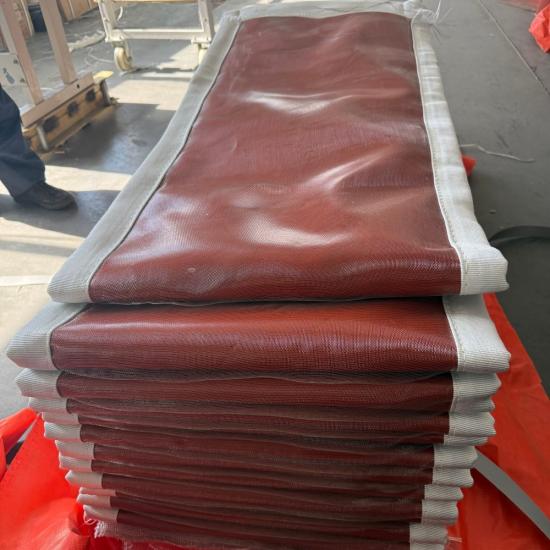
Khớp giãn nở vải không kim loại BSTFLEXĐây là một loại khớp nối linh hoạt được thiết kế riêng cho hệ thống ống dẫn công nghiệp, hệ thống khí nóng, khí thải và khí khói, nơi cần phải xử lý sự giãn nở nhiệt, rung động, chuyển động của thiết bị hoặc sai lệch lắp đặt mà không truyền tải tải trọng quá mức đến các đường ống và thiết bị liền kề.
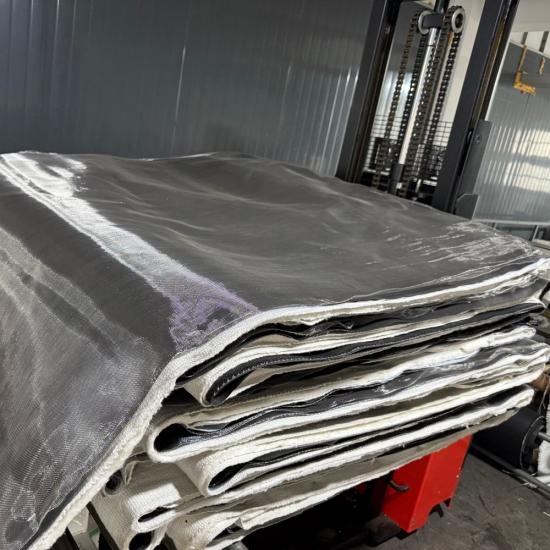
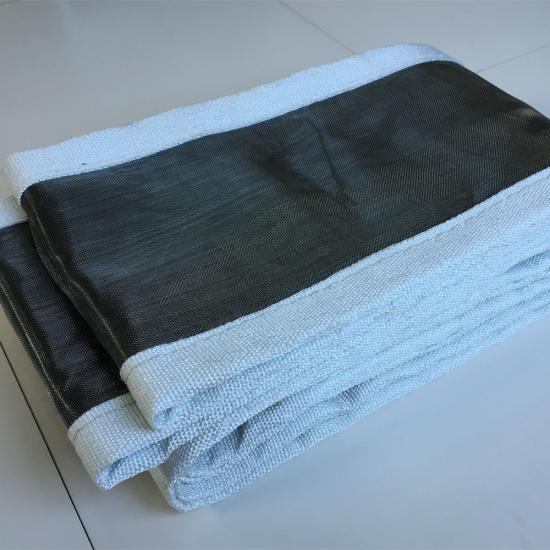
Không giống như các bộ phận kim loại cứng, mộtkhớp giãn nở vảiSử dụng một hoặc nhiều lớp vải dệt mềm dẻo, vải tráng phủ, lớp bịt kín và lớp cách nhiệt được lựa chọn theo nhiệt độ hoạt động, thành phần khí, điều kiện áp suất, yêu cầu chuyển động và môi trường xung quanh. Phần tử mềm dẻo có thể chịu được sự dịch chuyển theo trục, theo chiều ngang và theo góc trong khi vẫn duy trì kết nối được kiểm soát giữa hai đoạn ống dẫn.
BSTFLEX sản xuất các loại ống tròn, hình chữ nhật, hình vuông và các loại ống chuyên dụng.khớp giãn nở không kim loạiDành cho các nhà sản xuất thiết bị OEM, nhà thầu đường ống, hệ thống phát điện, nhà máy xi măng, thiết bị chế biến thép, lò công nghiệp, hệ thống thông gió và các công trình lắp đặt ở nhiệt độ cao khác.
| Sản phẩm | Khớp giãn nở vải phi kim loại |
| Tên gọi khác | Khớp giãn nở bằng vải, Khớp giãn nở ống dẫn bằng vải, Khớp giãn nở bằng vải composite, Bộ bù phi kim loại |
| Sự thi công | Cấu trúc linh hoạt một lớp hoặc nhiều lớp |
| Hình dạng | Hình tròn, hình chữ nhật, hình vuông và các hình dạng tùy chỉnh. |
| Sự chuyển động | Chuyển động theo trục, theo chiều ngang, theo góc và chuyển động kết hợp |
| Phương tiện truyền thông điển hình | Không khí nóng, khí thải, khí ống khói và khí công nghiệp |
| Nguyên vật liệu | Được lựa chọn dựa trên nhiệt độ, môi trường, tiếp xúc hóa chất, độ mài mòn và các yêu cầu cơ học. |
| Kích cỡ | Sản xuất theo yêu cầu dựa trên bản vẽ hoặc kích thước lắp đặt. |
| Ứng dụng | Hệ thống ống dẫn công nghiệp, khí thải, lò nung, nồi hơi, quạt và hệ thống khí nén công nghiệp |
MỘTkhớp giãn nở vải không kim loạiKhớp nối mềm là một loại khớp nối linh hoạt được lắp đặt giữa các đoạn ống dẫn hoặc thiết bị công nghiệp để bù lại sự chuyển động có thể tạo ra ứng suất trong hệ thống. Sự giãn nở nhiệt là một trong những nguyên nhân phổ biến nhất gây ra chuyển động, nhưng sự rung động, sự dịch chuyển của thiết bị, dung sai chế tạo và chuyển động kết cấu cũng cần được kiểm soát.
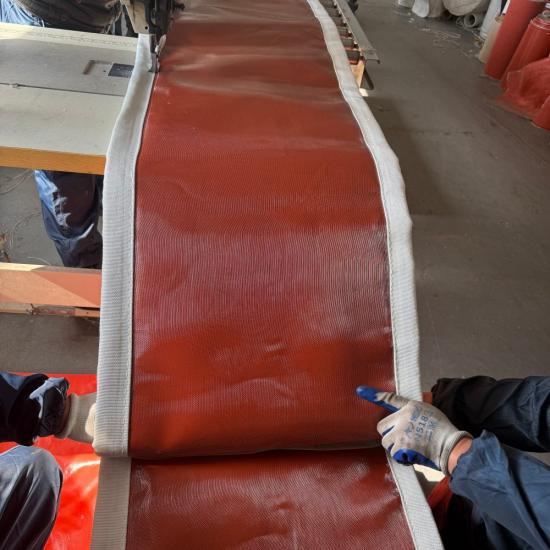
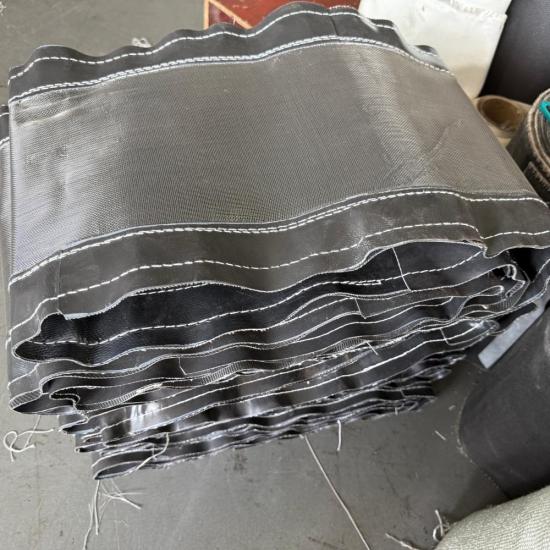
Thân mềm thường được chế tạo từ các lớp vải dệt kỹ thuật và vải tráng phủ thay vì ống thổi kim loại định hình. Tùy thuộc vào điều kiện hoạt động, cấu tạo có thể bao gồm màng bịt kín khí, vải gia cường, lớp cách nhiệt và lớp bảo vệ bên trong.
Công trình này tạo nên mộtkhớp giãn nở vảiĐặc biệt thích hợp cho các ống dẫn có tiết diện lớn, môi chất khí nóng và các ứng dụng yêu cầu chuyển động theo nhiều hướng.
Hệ thống ống dẫn công nghiệp giãn nở và co lại khi nhiệt độ hoạt động thay đổi. Nếu sự chuyển động này bị hạn chế hoàn toàn, ứng suất nhiệt có thể truyền vào thành ống, mặt bích, quạt, các mối nối thiết bị và cấu trúc đỡ.
Một cách linh hoạtkhớp giãn nở ống vảiNó tạo ra một vùng chuyển động được kiểm soát giữa các đoạn liền kề. Khi ống dẫn giãn nở, co lại hoặc dịch chuyển, phần linh hoạt sẽ thay đổi hình dạng thay vì ép toàn bộ sự dịch chuyển vào các bộ phận cứng.
Tùy thuộc vào hình dạng khớp nối và thiết kế hệ thống, khớp giãn nở có thể đáp ứng các yêu cầu sau:
Không có một loại vật liệu kết cấu nào phù hợp với mọi loại khe co giãn công nghiệp. Thiết kế đáng tin cậy bắt đầu từ điều kiện vận hành thực tế.
Một hệ thống đa lớp có thể bao gồm nhiều lớp chức năng, mỗi lớp thực hiện một nhiệm vụ khác nhau:
Lớp bịt kín khí giúp giữ lại môi chất trong quá trình và được lựa chọn dựa trên nhiệt độ, thành phần khí, độ ẩm, tiếp xúc với hóa chất và điều kiện áp suất. Tùy thuộc vào ứng dụng, có thể xem xét các vật liệu sợi thủy tinh phủ hoặc vật liệu gốc fluoropolymer.
Lớp gia cường cung cấp độ ổn định về kích thước và hỗ trợ cơ học cho phần tử mềm dẻo. Có thể lựa chọn sợi thủy tinh dệt và các loại vải kỹ thuật khác tùy theo các đặc tính cơ học và nhiệt cần thiết.
Các hệ thống nhiệt độ cao có thể cần một lớp cách nhiệt để giảm nhiệt độ truyền đến các vật liệu bịt kín bên ngoài. Độ dày và vật liệu cách nhiệt cần được thiết kế phù hợp với nhiệt độ khí, giới hạn nhiệt độ bên ngoài và hình dạng mối nối.
Trong trường hợp khớp giãn nở tiếp xúc với tốc độ khí cao, các hạt vật chất hoặc môi trường mài mòn, có thể cần đến hệ thống bảo vệ bên trong hoặc lớp lót dòng chảy để giảm tác động trực tiếp lên phần tử mềm.
Lựa chọn vật liệu là một trong những phần quan trọng nhất của quá trình này.thiết kế khớp giãn nở phi kim loạiBSTFLEX hợp tác với nhiều đối tác khác nhau.vải chịu nhiệt caovà các loại vải kỹ thuật được phủ lớp, cho phép cấu trúc linh hoạt thích ứng với các môi trường công nghiệp khác nhau.
| Loại vật liệu | Chức năng điển hình | Các yếu tố cần cân nhắc khi lựa chọn |
|---|---|---|
| Vải sợi thủy tinh | Reinforcement and thermal-resistant textile layer | Temperature, weight, weave and mechanical strength |
| Silicone Coated Fiberglass | Flexible outer or sealing layer | Temperature, weather resistance, flexibility and environment |
| PTFE Coated Fabric | Gas sealing and chemical-resistant layer | Chemical compatibility, temperature and process media |
| Silica Fabric | High-temperature thermal protection layer | Temperature exposure and insulation requirement |
| Insulation Materials | Reduction of temperature through the joint construction | Operating temperature and required external surface temperature |
| Metal Mesh or Internal Liner | Mechanical or flow protection where required | Gas velocity, abrasion, particles and installation geometry |
For particularly demanding thermal environments, BSTFLEX can evaluate high-silica textile solutions such as96% high temperature silica fabricas part of the overall thermal protection system where technically appropriate.
The final material combination should always be determined from actual application data rather than temperature alone.
Ahigh temperature fabric expansion jointis not defined by one universal maximum temperature. The permissible operating temperature depends on the complete joint construction, including the hot-face protection, insulation package, reinforcement fabric, gas seal membrane, external cover and the temperature distribution through those layers.
For this reason, BSTFLEX evaluates both process temperature and the temperature expected at individual layers of the expansion joint. This approach allows the materials to be selected for their actual operating environment rather than relying on a single generic temperature rating.
When requesting a high-temperature joint, provide the normal operating temperature, maximum or upset temperature, exposure duration and process medium wherever possible.
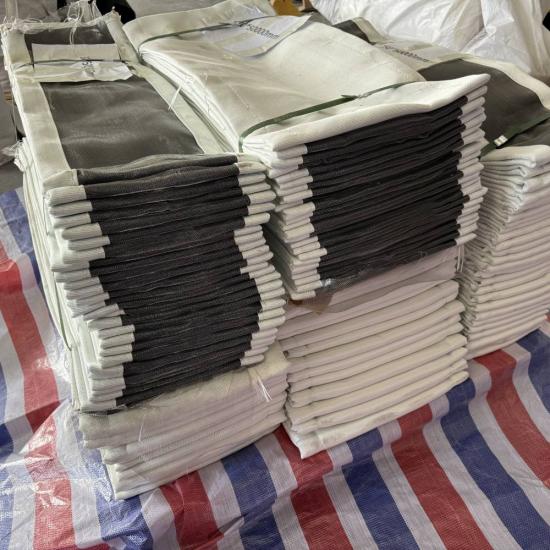
BSTFLEX manufactures expansion joints according to the shape and dimensions of the customer's ducting system.
Arectangular fabric expansion jointis commonly used on large industrial ductwork, boiler systems, air-handling equipment, furnace connections and flue-gas ducts. Corner geometry, movement distribution and attachment design require particular attention because stress is not distributed in the same way as on a circular joint.
Round and circular fabric expansion joints are suitable for cylindrical duct systems, fan connections, exhaust lines and process-air installations. Diameter, face-to-face length and movement requirements can be manufactured according to the installation.
Non-standard shapes, transitions and asymmetric configurations can be evaluated when standard round or rectangular joints cannot match existing equipment.
Different attachment arrangements can be supplied depending on the duct design and replacement requirements.
Belt-type fabric expansion jointsuse a flexible belt attached to mating metalwork and are suitable for many large industrial duct applications.
Flanged fabric expansion jointscan be manufactured as complete assemblies where the flexible element, insulation components and supporting metalwork are supplied as an integrated unit.
For replacement projects, BSTFLEX can manufacture according to customer drawings, dimensional records or available sample information.
BSTFLEXnon metallic fabric expansion jointscan be engineered for a broad range of hot-air and process-gas ducting systems.
Fabric joints can be used in boiler ducting, flue-gas handling systems, fan connections and other large gas-transport ducts where thermal movement and vibration need to be isolated.
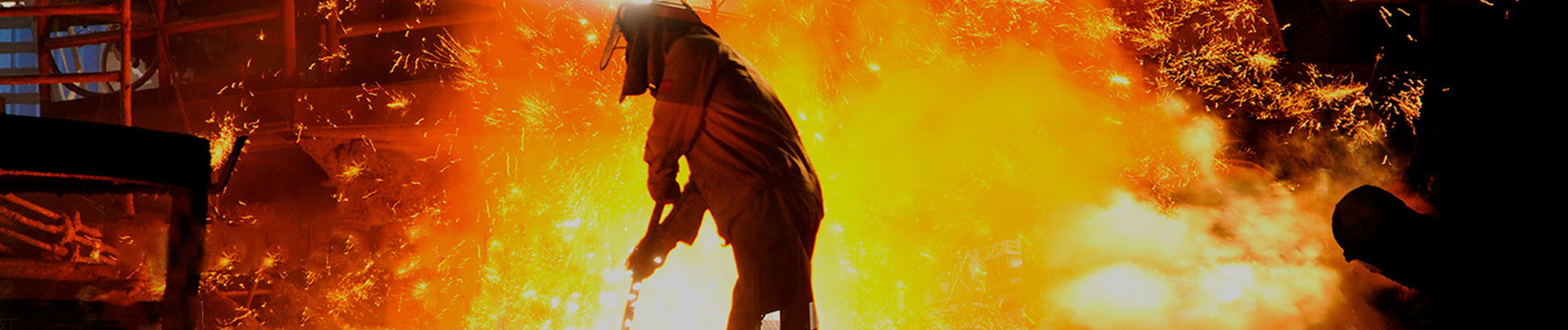
Cement production involves large ductwork exposed to heat, dust and continuous equipment movement. Expansion joints may be used around kiln-related ducting, process-air systems, fans and gas-handling equipment.
Furnace exhaust, hot-air ducts and process ventilation systems may require flexible connections capable of accommodating thermal growth while operating around demanding high-temperature equipment.
Where process gases contain corrosive constituents, joint materials should be selected according to chemical compatibility as well as temperature.
Fabric joints can compensate for expansion between heated equipment and downstream ductwork while helping isolate movement and vibration.
Flexible expansion joints can reduce the transmission of mechanical vibration between fans, blowers and rigid ducting.
High-temperature exhaust and hot-gas systems often require a flexible transition capable of accommodating repeated thermal cycles and installation movement.
| Design Factor | Fabric Expansion Joint | Metal Expansion Joint |
|---|---|---|
| Flexible Element | Technical fabric or composite textile construction | Formed metallic bellows |
| Typical System | Industrial ducting and gaseous-media systems | Pipe and process systems including higher-pressure service |
| Large Cross Sections | Well suited to large duct dimensions | Possible but design becomes more complex |
| Multidirectional Movement | Can accommodate axial, lateral and angular movement | Depends strongly on bellows configuration |
| Vibration Isolation | Good flexibility for fan and duct connections | Application dependent |
| Material Selection | Composite layers can be selected for thermal and chemical conditions | Determined mainly by metal alloy and bellows design |
The correct choice depends on pressure, temperature, process medium, duct geometry, required movement and applicable engineering standards. Fabric and metallic expansion joints should therefore not be treated as universally interchangeable products.
Selecting an expansion joint only by duct size or maximum temperature is not sufficient. Several operating parameters interact with each other and influence the appropriate construction.
The following information should be evaluated:
Providing this information allows the flexible element and supporting components to be selected around the real service conditions.
For faster engineering evaluation and quotation, send as much of the following information as available:
| Duct Size | Diameter or width × height |
| Joint Shape | Round, rectangular, square or custom |
| Installation Length | Face-to-face dimension |
| Operating Temperature | Normal continuous temperature |
| Maximum Temperature | Maximum or upset temperature and duration |
| Pressure | Normal and design pressure |
| Process Medium | Air, flue gas, exhaust gas or other process gas |
| Axial Movement | Compression and extension |
| Lateral Movement | Required offset movement |
| Angular Movement | Required angular displacement if applicable |
| Environment | Indoor, outdoor, chemical, dusty, wet or abrasive |
| Drawing | PDF, CAD drawing, dimensional sketch or existing joint details |
| Quantity | Prototype, replacement quantity or production requirement |
Industrial expansion joints are frequently project-specific components rather than standard catalogue parts. BSTFLEX supports customized manufacturing according to drawings, dimensional requirements and operating conditions.
Custom options may include:
Because BSTFLEX also works directly with thermal protection textiles and coated high-temperature fabrics, material construction can be evaluated as part of the expansion joint design instead of treating the flexible element as a generic component.
BSTFLEX focuses on engineered thermal protection and technical textile products for industrial applications. Our manufacturing capabilities cover high-temperature woven fabrics, coated fabrics, insulation materials and fabricated thermal components, providing a practical material base for customfabric expansion jointprojects.
A non metallic expansion joint is a flexible connection used primarily in ducting and gaseous-media systems to accommodate thermal expansion, vibration, misalignment and multidirectional movement. Its flexible element is normally manufactured from technical fabrics, coated textiles, insulation and other non-metallic materials selected according to the operating environment.
A fabric expansion joint uses a flexible textile or composite membrane, while a metallic expansion joint normally uses formed metal bellows. Fabric joints are widely used on large industrial ducts and gas-handling systems, while metallic bellows are common in piping and applications where system pressure or process requirements favor metallic construction.
Yes. Properly designed fabric expansion joints can accommodate axial, lateral and angular movement as well as combinations of these movements. The required movements must be provided during design so the joint geometry can be selected correctly.
There is no single temperature rating for every fabric expansion joint. Temperature capability depends on the flexible membrane, insulation package, hot-face protection, sealing material and overall joint construction. BSTFLEX selects the material system according to the normal operating temperature, maximum temperature and exposure conditions.
Depending on the application, materials may include fiberglass fabric, silicone-coated fiberglass, PTFE-coated fabric, silica fabric, insulation materials and metallic protective components. Each layer is selected according to its specific function.
Yes. Fabric expansion joints are widely applicable to industrial flue-gas and hot-gas ducting when the construction is engineered for the process temperature, chemical composition, moisture, pressure, gas velocity and movement requirements.
Yes. BSTFLEX manufactures rectangular, round, square and other custom configurations according to duct dimensions and installation requirements.
In many cases, yes. Dimensional measurements, photographs, operating conditions and information from the existing expansion joint can be used for an initial evaluation. A complete drawing or physical sample provides additional information when available.
The most useful information includes duct dimensions, joint shape, face-to-face length, operating and maximum temperature, pressure, process medium, axial movement, lateral movement, angular movement, gas velocity, chemical exposure, flange arrangement and required quantity. Drawings are strongly recommended where available.
Nếu bạn đang tìm kiếm khớp nối giãn nở thay thế hoặc đang phát triển hệ thống ống dẫn công nghiệp mới, hãy gửi bản vẽ và điều kiện vận hành của bạn cho BSTFLEX. Nhóm của chúng tôi có thể đánh giá hình dạng, kích thước, vật liệu mềm dẻo, cấu trúc cách nhiệt và yêu cầu về chuyển động cần thiết cho ứng dụng của bạn.
Để nhận báo giá, vui lòng cung cấp:Kích thước ống dẫn, nhiệt độ, áp suất, môi chất xử lý, yêu cầu chuyển động, chiều dài lắp đặt, số lượng và bản vẽ có sẵn.
Yêu cầu báo giá cho dự án khe co giãn bằng vải của bạn
Trước:
lá chắn nhiệt ngón tay tigKế tiếp:
Chăn cách nhiệt thùng máy phunNếu bạn có thắc mắc hoặc đề xuất ,, vui lòng để lại tin nhắn cho chúng tôi , chúng tôi sẽ trả lời bạn ngay khi có thể!

 English
 français
 Deutsch
 русский
 italiano
 español
 português
 Nederlands
 العربية
 日本語
日本語 한국의
한국의 Türkçe
 Polski
 slovenský
 Indonesia