English
 français
 Deutsch
 русский
 italiano
 español
 português
 Nederlands
 العربية
 日本語
 한국의
 Türkçe
 Polski
 slovenský
 Indonesia



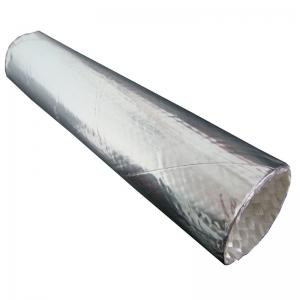
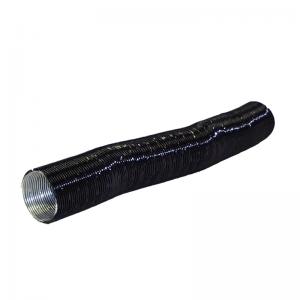
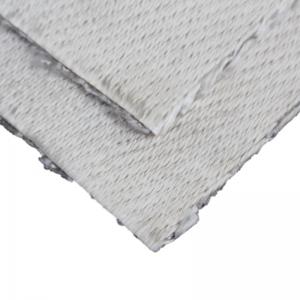
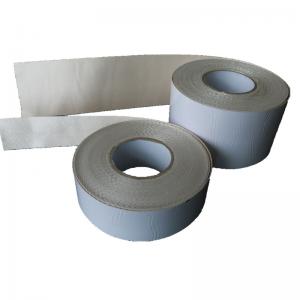
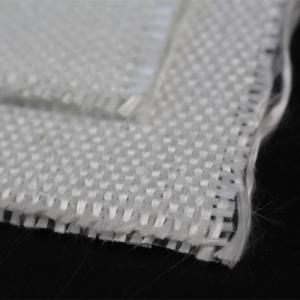
Two rolls of silica tape can look almost identical on a quotation and behave quite differently on the production floor. One may keep a clean edge while it is fed through a sewing operation; the other may be easier to produce in a non-standard width or supply with a pressure-sensitive adhesive. The difference usually starts with how the strip is made.
Silica woven tape is woven directly to its finished width. Its longitudinal edges are formed during weaving. Silica slit tape begins as a wider silica cloth and is cut into narrower rolls. Its long edges are therefore cut edges. Neither construction is universally better; each solves a different manufacturing and installation problem.
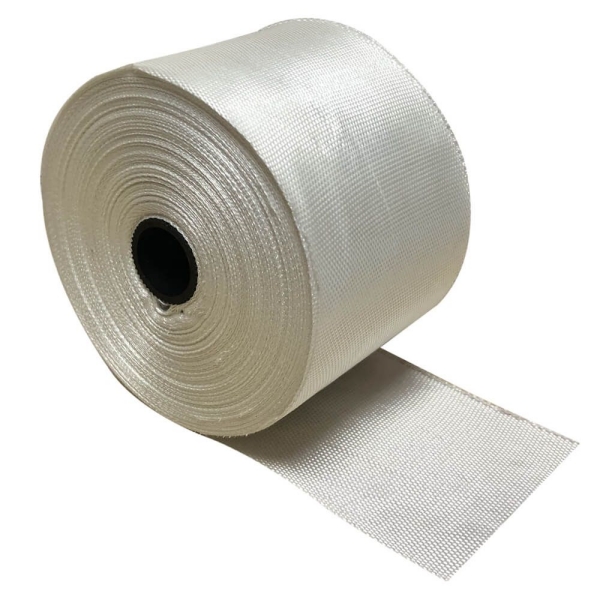
The edge tells you how the tape was made
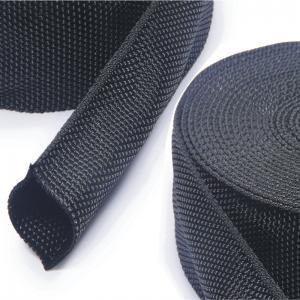
A woven-edge tape is produced as a narrow webbing. The yarns are arranged to create the finished width, so the two long sides are part of the woven structure. This is useful when the tape will be handled repeatedly, sewn into a removable insulation part, wrapped around equipment, or left with an exposed edge.
A slit tape is converted from a wider cloth. Slitting gives the manufacturer more freedom to produce selected widths from an existing fabric, and it works well when an adhesive backing or release liner is required. The trade-off is that the cut edge can release yarns if it is rubbed, folded sharply or handled repeatedly.
| Point to compare | Silica woven tape | Silica slit tape |
|---|---|---|
| How it is made | Woven directly to the final width | Cut from wider silica cloth |
| Longitudinal edge | Woven or finished edge | Cut edge |
| Typical reason for choosing it | Edge stability, repeated handling, wrapping and fabrication | PSA backing, selected cut widths and conversion into rolls or shapes |
| What to check first | Width, thickness, woven-edge quality and roll format | Cut-edge condition, adhesive, release liner and final retention |
This distinction is more useful than describing one product as “plain” and the other as “adhesive.” A woven silica tape can also be supplied with PSA when the construction and order support it. Edge construction and backing should therefore be treated as two separate specification fields.
When a woven edge is worth specifying
A woven edge becomes important when the tape is expected to survive more than a single, simple installation. It is often the better starting point for edge binding on removable insulation blankets, furnace curtains and sewn thermal parts, because the tape can be fed, folded and stitched without exposing a continuously cut longitudinal edge.
It is also useful on pipework, hoses and cables where the tape will be handled during wrapping or removed during maintenance. That does not make it immune to fraying. Any tape can be damaged at a cut end or by sharp hardware. The advantage is that the long edges are built into the woven structure rather than created by a slitting blade.
Industrial buyers may describe this construction as woven edge silica tape, narrow woven silica tape, silica webbing tape or high silica woven webbing. These terms usually point to the same basic requirement: a narrow tape woven to width rather than cut from a broad cloth.
Why slit tape remains useful
Slit tape is not an inferior version of woven tape. It is a different conversion route, and in many applications it is the more practical one.
Cutting from wider cloth can make it easier to supply a selected width, pair the textile with a pressure-sensitive adhesive, add a release liner, or convert the material into shorter pieces. This is especially useful where the tape is positioned on a hose, cable, pipe or fabricated component before another fixing method is applied.
The edge condition should be considered honestly. A PSA can help hold the strip flat during installation and may reduce movement at the edge, but it does not turn a cut edge into a woven edge. Where the tape will be exposed to repeated abrasion, the real sample should be checked on the actual component rather than approved from a catalogue photograph.
PSA is a backing option, not a material grade
The most common specification mistake is to treat “adhesive backed” as though it defines the whole tape. It does not. The silica textile provides the thermal layer. The PSA provides tack for positioning or, in some cases, a qualified service bond.
That means a complete description should state both the textile construction and the backing:
- woven silica tape, plain;
- woven silica tape with PSA;
- silica slit tape, plain;
- adhesive backed silica slit tape with release liner.
The adhesive also needs its own temperature data. The continuous service capability of the silica textile cannot be assigned to the PSA. In some installations, the adhesive is only expected to keep the first turn or cut piece in place while the component is assembled. In others, the buyer expects a lasting bond. Those are different requirements and should be stated clearly.
Temperature should be specified at the tape, not at the furnace controls
Silica tape is selected for high-temperature work, but the useful temperature is the temperature at the tape location. A furnace setpoint, hot-pipe temperature and adhesive bond-line temperature may all be different.
For plain woven tape, request the continuous service temperature of the exact textile construction and any permitted short-duration peak. For PSA-backed tape, add the recommended application temperature, continuous adhesive temperature and peak exposure for the bond line.
Also state what the tape must look and feel like after heating. A strip that remains physically present may have become stiff or weak. That can be acceptable on a stationary wrap and unacceptable on a removable cover or a door seal that is opened every day.
Which construction suits pipe insulation?
Both constructions can be used around industrial pipework, but they are installed differently.
Woven tape is a good choice where the installer wants a stable edge and the wrap will be secured mechanically. It is also easier to specify for repeat wrapping work where the same width and woven structure are used across several assemblies.
PSA-backed slit tape is useful when the first turn needs to stay in position, when the surface is difficult to reach, or when the strip is being placed on a component before another layer or fixing is added. The substrate must be suitable for the adhesive, and the final retention method should still be defined.
For either product, the RFQ should include pipe outside diameter, tape width, overlap, number of passes, continuous and peak temperature, surface condition and fixing method.
Which construction suits cables and hoses?
On cables and hoses, the wrap has to follow bends without creating hard folds or loose edges. A narrower woven tape often handles complex routing well. PSA-backed slit tape can simplify positioning, but only when the adhesive is compatible with the cable jacket or hose cover.
Silicone rubber, fluoropolymer, oily rubber and textured surfaces can be difficult substrates. A tape that bonds well to clean metal may lift from a low-energy polymer or contaminated hose cover. Sample approval should use the real substrate.
The wrap does not increase the original temperature rating of the cable or hose underneath. The protected component must remain within its own allowable temperature.
Furnace doors, kiln doors and flat thermal seals
A flat silica tape can be used in selected furnace, kiln and boiler-door details where the joint is designed for a flat woven strip. Woven edges are often useful when the tape is repeatedly fitted or sewn into a fabricated part. PSA-backed slit tape can assist assembly, but the adhesive does not determine the closing load or sealing performance.
Provide the seating width, installed thickness, closure method, movement and any leakage requirement. A flat silica tape should not be treated as a direct substitute for a rope gasket, tadpole seal or pressure-rated gasket simply because the temperature range appears similar.
Fabrication and sewn insulation parts
In removable insulation blankets and thermal curtains, woven silica tape is often used as an edge binding or local reinforcement. The tape should be reviewed together with the main fabric, insulation core, sewing thread, fasteners and seam design.
For this type of work, buyers should specify finished width, thickness, woven-edge requirement, bend radius, cut-length tolerance and expected folding or handling cycle. A tape can meet its own temperature requirement while the thread or adjacent fabric becomes the limiting component.
Current BSTFLEX supply references
The current published range for BSTFLEX silica woven tape includes widths from 25 mm to 200 mm, a standard thickness of 1.5 mm and 30 m rolls. Special width, thickness, length, packing and PSA-backed versions can be reviewed.
The current published range for BSTFLEX adhesive-backed silica slit tape includes widths from 25 mm to 200 mm, a standard thickness of 0.8 mm and 50 m rolls, with other thicknesses shown as options.
These are supply references rather than a promise that every width, thickness and backing combination is stocked. The final combination, MOQ and delivery format should be confirmed with the quotation.
How to write the RFQ
| RFQ item | Information to provide |
|---|---|
| Application | Pipe, hose, cable, furnace seal, blanket edge, thermal curtain or another industrial use |
| Edge construction | Woven edge or approved slit edge |
| Backing | Plain or PSA-backed, including whether the PSA is for positioning or service bonding |
| Dimensions | Width, thickness, roll or cut length and tolerances |
| Temperature | Continuous textile temperature, peak exposure and adhesive bond-line temperature |
| Installation | Overlap, substrate, compression, sewing or mechanical fixing |
| Environment | Abrasion, vibration, moisture, oil, chemicals and maintenance handling |
| Supply | Sample quantity, forecast, packaging, labeling and required documents |
Questions buyers usually ask
Can woven silica tape be supplied with adhesive?
Yes. PSA can be added to a suitable woven construction. The quotation should still state that woven edges are required, because “adhesive backed silica tape” alone does not define the edge.
Does PSA prevent a slit edge from fraying?
It can help stabilize the strip during handling, but it does not create a woven edge. If the edge will be rubbed or repeatedly handled, approve the actual construction on the real assembly.
Can the PSA work at the same temperature as the silica textile?
Not by assumption. The textile and adhesive have separate service limits. Ask for the temperature capability of the exact adhesive system and define whether it is needed for positioning or long-term bonding.
Which tape is better for pipe wrapping?
Woven tape is often preferred for edge stability. PSA-backed slit tape is useful where installation positioning matters. Diameter, overlap, heat exposure, movement and permanent retention determine the final choice.
Should woven and slit tapes share one part number?
No. They should be controlled as different constructions. The part description should identify edge type, backing, thickness, width and roll length.
Request the right silica tape construction
BSTFLEX supplies woven-edge silica tape and adhesive-backed silica slit tape for industrial insulation, sealing and fabricated thermal protection. Send the application, edge requirement, backing, dimensions, temperature, quantity and packaging requirements for review.
Compare other industrial constructions in the BSTFLEX High Temperature Tapes range, or request a silica tape quotation.