Heavy wall fiberglass sleeving needs to fit both the component inside it and the space around it. Selecting by nominal inner diameter alone can leave a covered hose too large for its original clip or make a tube difficult to route through a bracket. Specify the finished wall thickness, available clearance and bend geometry together, then approve the sleeve on a representative assembly.
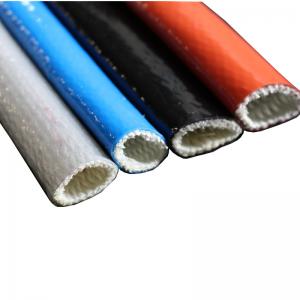
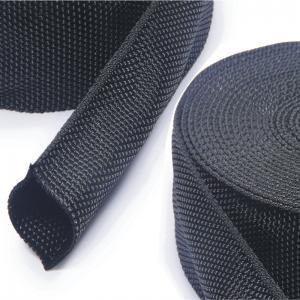
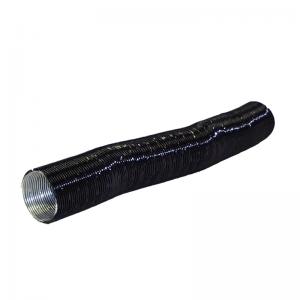
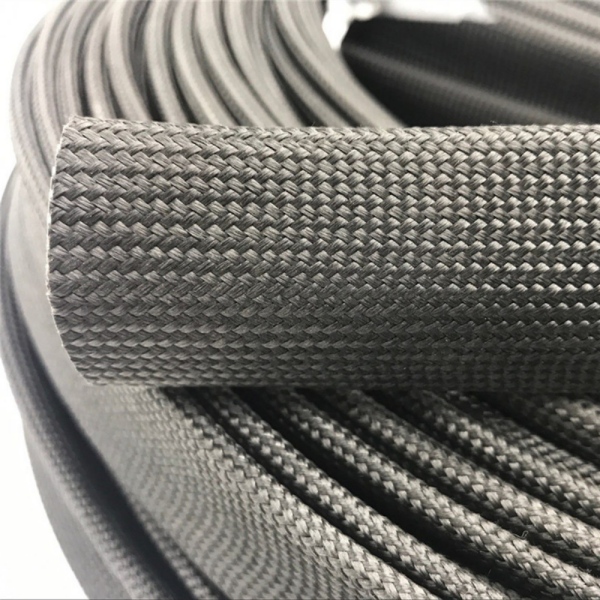
BSTFLEX Acrylic Resin Heavy Duty Fiberglass Sleeving uses a thick braided glass construction with a fiberglass cord incorporated into the braid and an acrylic resin treatment. The product is listed as the FGS-SN series. Its construction makes the installed shape an important part of sample evaluation.
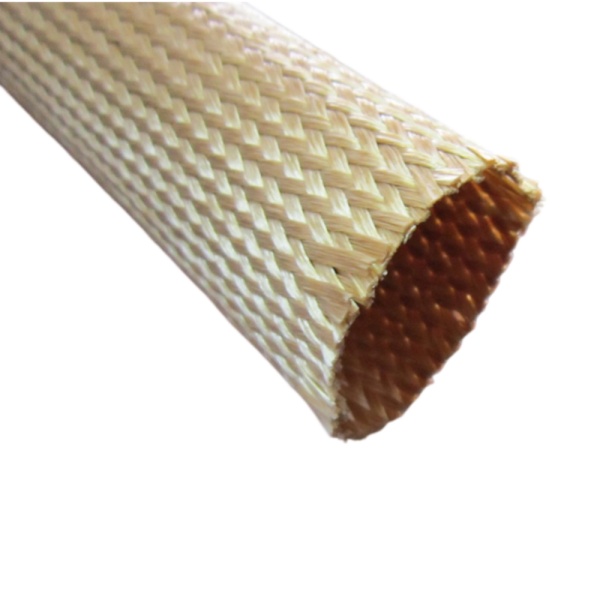
Start with the outside diameter of the protected hose or tube. Include local changes such as a ferrule, formed bead or coupling if the sleeve must pass over them. Next, identify the maximum permitted outside dimension of the covered assembly. Finally, mark the protected length along its actual route, including bends.
For preliminary space planning, a circular sleeve has an outside diameter approximately equal to its installed inside diameter plus twice its wall thickness. This is a geometric estimate, not a manufacturing tolerance. A textile wall can compress, become oval or change shape as the braid opens. Use the measured sample envelope for the final drawing.
Specify how thickness is to be measured. A reading taken with pressure on a soft braid may differ from an uncompressed reading. Supplier and buyer should use the same method, especially when the design leaves little room for variation.
A thicker construction may be considered when the assembly requires more material around the hose or tube, but additional thickness also occupies space. Review each support and passing point before choosing it. Forcing a covered hose into an undersized clip may compress the sleeve unevenly or interfere with the hose beneath it.
| Location | Dimension or condition to check | What the sample should demonstrate |
|---|---|---|
| Straight protected section | Component OD and finished sleeve envelope | Fit within the allocated installation space |
| Clip or bracket | Opening, edge condition and clamping method | No damaging pinch point or interference with assembly |
| Bend | Routing radius and nearby clearance | Coverage without unacceptable bunching or restriction |
| Fitting passed during installation | Largest outside dimension and sharp features | Passage without tearing or displacing the braid |
| Moving section | Full travel and adjacent parts | Clearance throughout the intended movement |
Do not assume that a sleeve which clears a bracket at rest will clear it during vibration or movement. Inspect the complete travel of the assembly. Where repeated contact remains, agree a wear evaluation that represents the actual contacting surface and movement.
The p134 product description identifies an expandable construction, but it does not provide a universal expansion ratio. Confirm the passing diameter for the selected size by trial. A nominal size is not a guarantee that the tube will pass a substantially larger connector.
During installation, watch both the opening of the braid and the remaining covered length. Mark the required protection endpoints before fitting the sample. After it is positioned around the tightest bend, check whether either end has moved away from its mark. Set the production cut length from the approved installed condition rather than adding an arbitrary allowance.
If installation requires removal of a fitting, include that sequence in the work instruction. A continuous braided tube requires an accessible path over the component; an inaccessible assembled line may need another construction.
Wall thickness does not establish a fixed temperature reduction. Define whether the purpose is to limit heat reaching a hose, reduce heat loss from a tube or achieve a specified surface temperature. Those objectives place the measurement at different locations.
Record the heat source, contact or noncontact exposure, operating duration and surrounding airflow. Measure the protected component during a representative operating cycle. For a hose or cable, compare its measured temperature with the component supplier's limit. Where personnel contact is possible, assess the accessible surface under the applicable contact conditions rather than assuming that insulation makes it safe to touch.
Also inspect the resin finish and braid after the thermal cycle. Ask for the service conditions and supporting data for the finished construction. The behavior of a binder during heating is a separate question from the heat resistance of the glass reinforcement. A heavy wall description alone does not establish a fire protection, electrical insulation or hose burst containment rating.
Send a drawing with the hose or tube OD, maximum installation obstacle, protected length, tightest bend and permitted finished envelope. Add the selected nominal sleeve size, required wall thickness and measurement method. Include temperature exposure, fluids, motion and any abrasion requirement.
When comparing quotations, keep these details consistent. Two samples with the same nominal ID may occupy different space or behave differently at a bend. Preserve the approved sample and record the construction, fit observations, end retention and inspection method used for acceptance.
For BSTFLEX supply, Anhui Parker New Material Co., Ltd. handles manufacturing. Provide your drawing or sample, trial quantity and production demand for review of the proposed construction. Confirm any special dimensions, cut lengths and packing requirements in the quotation.
No. It must meet the thermal and mechanical requirements while fitting the available space. Extra thickness that causes interference or prevents the intended bend can make an otherwise suitable sleeve impractical.
Approve that condition on the complete assembly. Check the sleeve and the protected component after fastening and service exposure. Do not treat uncontrolled compression as a substitute for specifying the correct clip and installed envelope.
The p134 construction is described as a heavy wall braid incorporating a fiberglass cord. The FGS-ST saturated fiberglass sleeve also uses acrylic treatment, but that shared treatment does not make the two constructions interchangeable. Compare finished thickness, braid structure, fit and application data for the proposed sizes.
Use the FGS-SN product size table as a starting point, then submit the component and installation dimensions. Request a representative sample before fixing the sleeve size on a production drawing.

 English
 français
 Deutsch
 русский
 italiano
 español
 português
 Nederlands
 العربية
 日本語
 한국의
 Türkçe
 Polski
 slovenský
 Indonesia